

Product and service explainer writing makes or breaks your website’s “So… what do you actually do?” moment. In 2026, people are busy, sceptical, and scanning fast – so if your offer is unclear, they don’t argue with it. They just leave. Nielsen Norman Group’s usability research has shown for years that users scan web pages rather than read word-for-word, which is why structure and clarity matter so much.
Table of Contents
Why “salesy” explainers fail (and what converts instead)
A salesy explainer usually sounds like this:
- Big claims, thin proof
- Features dumped without context
- Buzzwords (“cutting-edge”, “best-in-class”)
- Pressure language (“Don’t miss out!”)
The issue isn’t enthusiasm. It’s trust. When your copy pushes too hard, it raises questions you didn’t answer: What do I get? Is this for me? What happens next? What’s the risk?
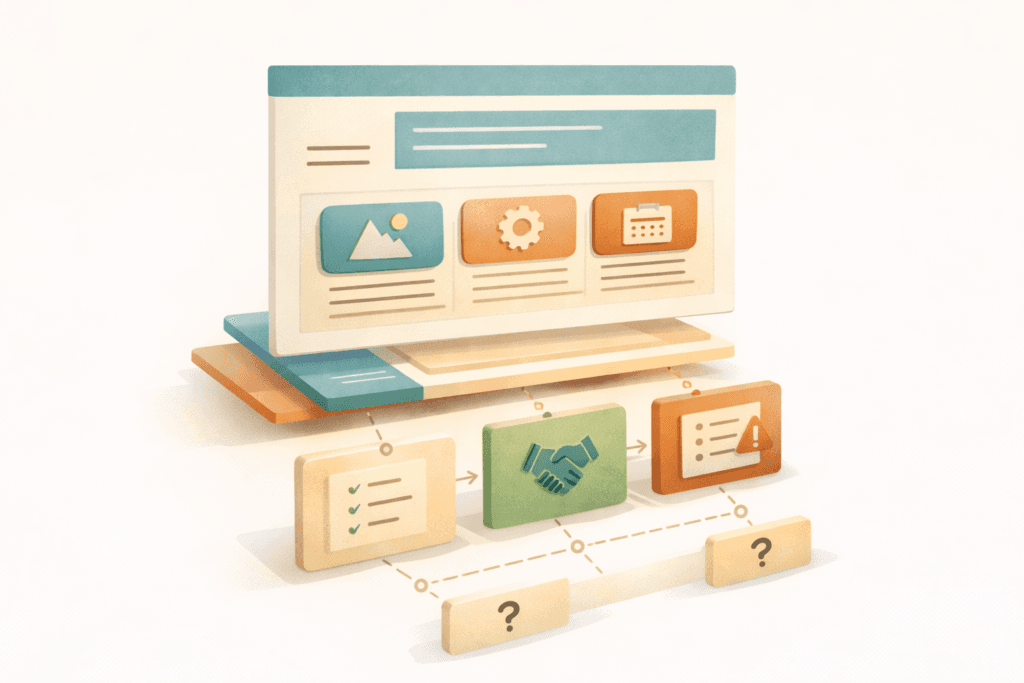
What converts better is calm clarity:
- Plain language that respects the reader’s time
- Scannable structure (headings, bullets, short paragraphs)
- Decision support (who it’s for, who it’s not, how to choose)
- Specifics and trade-offs (the “adult” version of marketing)
If you offer something complex, like say websites, hosting, SEO, apps, custom development, product and service explainer writing is how you make complexity feel safe.
What “explainer writing” actually includes (not just a pretty intro)
Most small business sites have one of these problems:
- They have a “Services” page that’s just a list.
- They have multiple service pages, but each is vague and similar.
- They have good information… but it’s hard to scan.
Strong product and service explainer writing typically shows up in:
- Service pages (core offer explanations)
- Product pages (packages, deliverables, what’s included)
- Landing pages (one offer + one action)
- Supporting blogs (“how it works”, “what to expect”, “buyer’s guides”)
Think: an explainer is not an essay. It’s a guided decision page.
Product and service explainer writing: the 9-section structure that keeps it human
Here’s a structure you can reuse for almost any offering. (This is also the easiest way to brief a writer and keep consistency across the site.)
1) The one-sentence outcome
Start with what the buyer gets, in plain language.
Example style:
- “Get a fast, mobile-friendly website that makes it easy for customers to trust and contact you.”
Plain language works even for expert audiences because it reduces friction and cognitive load.
2) Who it’s for (and who it’s not)
This is where you stop sounding generic.
- Ideal for: small teams, specific industries, certain budgets/timelines
- Not ideal for: edge cases you can’t support well
This is a conversion win because it makes the right people feel seen and the wrong people self-select out.
3) The problem you’re actually solving (not the feature list)
Explain the “before” state in the customer’s language.
- “Leads are dropping because the site is slow and unclear.”
- “People ask the same questions because your offer isn’t explained simply.”
4) Your approach in 3–6 steps
People buy “how it works” as much as they buy the outcome.
Keep it scannable (steps + short lines). This matches how users consume content online.
5) Deliverables (what’s included)
Be concrete. Avoid “support included” without specifics.
If you offer packages, this is the section where you list differences clearly.
For a reference example you can take a look at: Socials, Blogs & Article Writing
6) Proof without hype (trust signals)
You don’t need wild claims. You need credibility cues such as:
- what “done” looks like
- what you check before launch
- what you provide after delivery (handover, support options)
7) FAQs (handle risk + objections)
FAQs are where you gently remove doubt without selling.
Also: Google explicitly calls out using words in prominent locations (titles/headings/alt text) and ensuring content is helpful and people-first. FAQs are often a natural place to be helpful without fluff.
8) Pricing context (without pressure)
If you publish pricing, keep it calm and explain what affects it (scope, complexity, volume, timeline).
For example, VVRapid’s content packages on our service page show monthly options (USD) and “cancel anytime”:
- Starter Content Package: $199 / month
- Growth Content Package: $399 / month
- Authority Content Package: $799 / month
(If you use this section: keep it factual and avoid “limited time” language.)
9) Next step (one clear action)
One button, one primary action:
- “Request a quote”
- “Book a call”
- “See packages”
The “no-salesy” writing rules that make explainers convert
Use these rules to keep product and service explainer writing persuasive without feeling pushy.
Rule 1: Replace hype with specificity
Swap:
- “Premium, world-class solutions”
With: - “Two revision rounds, keyword-informed topics, and on-page SEO formatting.”
Rule 2: Use “because” to build trust
People relax when the reasoning is visible.
- “We keep paragraphs short because users scan.”
- “We add FAQs because buyers need clarity before contacting you.”
Rule 3: Make trade-offs explicit
This is the fastest way to sound human.
- “If you need results next week, this isn’t the right approach.”
- “If your niche is competitive, you’ll likely need deeper content.”
Rule 4: Write like a helpful specialist, not a billboard
Tone target:
- calm
- clear
- direct
- not overly clever
Nielsen Norman Group recommends concise, scannable writing patterns (headings, bullets, meaningful structure).
A practical checklist for product and service explainer writing
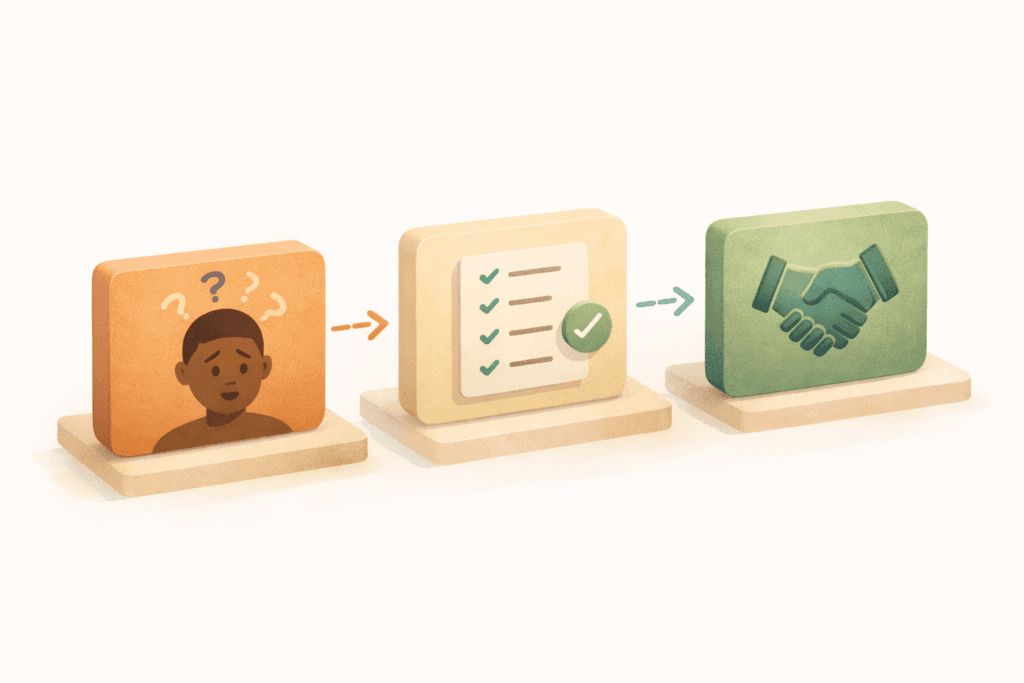
Use this as your pre-publish checklist:
- Outcome sentence: clear in the first 2 lines
- Audience fit: who it’s for + not for
- Problem clarity: named in customer language
- Process: 3–6 steps, scannable
- Deliverables: specific list (not vague promises)
- Differentiator: one real reason to choose you (not “quality”)
- Risk reducers: timelines, revisions, what happens next
- FAQs: 3–6 questions that remove doubt
- SEO basics: one page = one topic; internal links included Google for Developers
- Call to action: one main next step
If you do nothing else: nail the outcome, fit, and process. That alone lifts weak pages.
Common mistakes that quietly kill conversions
Mistake 1: Starting with your company instead of the customer
Fix: open with the outcome and the problem.
Mistake 2: Listing features without explaining why they matter
Fix: tie each deliverable to an outcome.
Mistake 3: Hiding the process
Fix: show your steps. Buyers fear uncertainty more than they fear price.
Mistake 4: Walls of text
Fix: headings + bullets + short paragraphs. Users scan first, then decide whether to read.
Mistake 5: Trying to close the sale inside the explainer
Fix: help them decide. Your CTA can stay calm.
Mistake 6: One generic services page for everything
Fix: create focused pages (or clusters) per service. That’s better for clarity and often better for SEO.
How to brief a writer for product and service explainer writing (10 minutes)
If you want great product and service explainer writing, your brief doesn’t need to be long, but it must be specific.
Copy/paste this and fill it in:
- Service/product name:
- Who it’s for: (industry, role, size, location)
- Common “before” pain:
- Desired outcome:
- Top 3 deliverables:
- Your process in 3–6 steps:
- Top 3 objections you hear:
- What makes you different (proof-based):
- Next step CTA:
Then add 2–3 competitor links (for “what we want to avoid” as much as “what we like”). That’s usually enough.
Where blogs fit: explainers that build trust before the enquiry
Service pages convert. Blogs warm people up.
A smart combo is:
- One clear service page explainer
- 2–4 support blogs answering the “what, why, how, and cost” questions
- Internal links between them (so users and search engines see the relationships)
If you’re building organic growth, pair clear service pages with an SEO plan so your pages match search intent.
How VVRapid can help
VVRapid can help with product and service explainer writing that’s clear, structured, and on-brand. So visitors understand what you do quickly and feel confident taking the next step. If you want ongoing publishing, the Socials, Blog & Article Writing packages support consistent content.
If you want a sharper service page, interview-led writing and a clean structure can turn a vague offer into a clear one: Request a Custom Content Quote or if you’d rather talk it through first, reach out and we’ll point you in the right direction. Contact VVRapid
FAQ: Product and service explainer writing
Is product and service explainer writing only for “big” companies?
No. Small businesses often benefit more because clarity reduces wasted enquiries and shortens decision time.
Should I put pricing on my explainer page?
If you can publish a range or package pricing, it can reduce low-fit leads. If pricing varies, explain what changes the cost (scope, complexity, volume).
How long should an explainer page be?
Long enough to answer the buyer’s key questions. Many great pages land between 700–1,500 words, with strong structure and FAQs.
Does formatting really affect conversions?
Yes, users scan first. Headings, bullets, and concise sections help people find what they need quickly.
Will this help SEO?
It can. Clear page focus, helpful content, and internal linking align with Google’s people-first guidance and SEO essentials.
External references used (helpful resources)
- Nielsen Norman Group – How Users Read on the Web ↗
- Nielsen Norman Group – 7 Tips for Presenting Bulleted Lists ↗
- Google Search – Creating helpful, reliable, people-first content ↗
- CXL – Writing Product Descriptions That Convert ↗