
Running a small business in 2026 means wearing a lot of hats. You know you should be posting on social, updating your blog and publishing useful articles – but between clients, operations and admin, content often falls to the bottom of the list.
Weeks go by. Then months. Suddenly:
- Your last blog post is from last year
- Social feels like random promos and “Happy Friday!” posts
- Your website has no in-depth content explaining what you actually do
That’s where social media blog content for small businesses becomes a strategic asset, not just another chore.
The good news: you don’t need to publish every day or be on every platform. You need:
- The right mix of social posts, blogs and articles
- A realistic publishing rhythm you can actually keep up with
- Content that sounds like you and supports what you sell
This guide will walk you through:
What to look for in a content writing service or package
Why consistent content matters
How social posts, blogs, articles and content hubs work together
How social media blog content for small businesses supports visibility, trust and SEO
How often you should publish at different stages
This guide is all about practical, realistic social media blog content for small businesses that you can actually maintain.
Table of Contents
Why consistent content still matters for small businesses in 2026
Let’s skip the vague “content is king” line and get specific about what consistent content actually does for you.
1. You stay visible without shouting
Your ideal customers are constantly:
- Scrolling social feeds
- Googling questions
- Comparing options
If they only see you now and then, they’ll forget you.
Regular:
- Social posts keep your name in front of people
- Blog posts give them something useful to click and read
- Articles give them a reason to trust you
Instead of screaming “buy now” every week, you show up with something helpful and relevant.
2. You answer questions before calls and meetings
Good social media blog content for small businesses can quietly answer:
- “Is this service right for a business like mine?”
- “What’s the difference between your basic and premium package?”
- “What kind of results or timeline should I expect?”
When your content covers this, sales calls start further along. Prospects arrive pre-informed, not confused.
3. You build authority without being pushy
Anyone can say, “We’re experts.” Authority content shows it:
- Helpful blog posts that solve real problems
- Thought leadership articles that share your views and experience
- Explainer articles that make complex offers feel simple
Over time, this is what makes people think:
“These are the people who actually know what they’re doing.”
4. You feed your SEO
Search engines reward websites that:
- Publish useful, structured content
- Cover topics in depth, not with thin pages
- Use internal links to show how pages relate
Blog posts and articles give you the pages you need to rank for more than just your brand name or one main keyword.
Social posts vs blogs vs articles vs content hubs
You don’t have to use every format right away, but it helps to know what each one is for.
Social posts: quick, frequent, top-of-mind
Social posts are your small, regular touchpoints:
- Short tips pulled from longer content
- Screenshots, carousels, quick stories
- Links back to new blog posts and articles
- Proof you’re active and still in business
They’re there to:
- Keep you visible
- Show your personality
- Nudge people toward your website
A simple starter rhythm might be 4 social posts per month on 1–2 platforms. A stronger rhythm might be 8–16 posts per month across 1–3 platforms.
Blog posts: practical, helpful, search-friendly
Blog posts are the workhorses of social media blog content for small businesses:
- Usually 800–1,200+ words
- Focused on one question or topic
- Practical, useful and easy to scan
Examples:
- “How often should small businesses update their website content?”
- “5 simple content ideas when you don’t know what to post”
- “What to include in a service page to get more enquiries”
They’re great for:
- Attracting search traffic
- Giving you something to share on social and in newsletters
- Supporting your sales conversations with proof and explanations
Starter setups often include 2 blog posts per month at 800–1,000 words. Growth setups might keep 2 posts but deepen them to 1,000–1,200+ words with stronger SEO.
Thought leadership articles: deep, opinionated, authority-building
Thought leadership goes beyond basic “how-to” content:
- 1,200–1,800+ words
- Your views, frameworks and experience
- Often non-generic, more researched and more structured
They help you:
- Stand out from competitors who only post surface-level tips
- Attract higher-intent, research-driven buyers
- Build reputation and trust in your niche
These fit really well into “authority” or premium content plans.
Product & service explainers: clarity converts
Explainer articles:
- Focus on a single product or service
- Explain what’s included, who it’s for, how it works and what results to expect
- Use straightforward language, not jargon
They’re crucial when you:
- Offer multiple packages (e.g. Basic / Standard / Premium)
- Sell something that’s not instantly obvious
- Want your website to “sell with you”, not just sit there
These pages often become key internal-link targets from your blogs and social posts.
SEO-focused content hubs: owning your key topics
A content hub (or content cluster) is:
- One main “pillar” page on an important topic
- Surrounded by related posts and articles that link in and out
For example, you might build hubs around:
- “small business website design”
- “small business SEO packages”
- “social media blog content for small businesses”
This is how you signal to Google:
“We’re the go-to resource on this topic, not just a single random post.”
How social media blog content for small businesses works together
It helps to think about content as a journey:
- Social posts
Grab attention, begin conversations, point back to your site. - Blog posts
Answer specific questions and provide helpful detail. - Articles & explainers
Help visitors compare options and understand your approach. - Service and package pages
Make it easy to enquire, book or sign up.
A simple example:
- Someone sees a short social post: “3 mistakes small businesses make with blog content”
- They tap through to your blog post that explains those mistakes and how to fix them
- At the end, they see a link to an article about “How content packages work for small businesses”
- From that article, they click through to your Basic / Standard / Premium content plans and send an enquiry
That’s social media blog content for small businesses doing real work. Not from one viral post, but from several pieces that support each other.
When you connect social posts, blog posts and deeper articles, social media blog content for small businesses becomes a complete path from first touch to enquiry.
How often should you publish?
You don’t need to post every day to be effective. You do need a rhythm that:
- You can realistically sustain
- Makes sense for your audience
- Matches your growth stage
Starter stage: just getting consistent
Goal: Look active, build trust, and slowly grow a content library.
A realistic starter cadence:
- 2 blog posts per month (800–1,000 words)
- 4 social posts per month (on 1–2 platforms)
This is where many starter content packages sit: enough to stop your channels looking abandoned and start building momentum.
Growth stage: content supports SEO and marketing
Goal: Use social media blog content for small businesses to support SEO, email marketing and campaigns.
A realistic growth cadence:
- 2 blog posts per month (1,000–1,200+ words with stronger SEO)
- 8 social posts per month (across 1–3 platforms)
- A simple content plan so posts build on each other
Here content isn’t just “nice to have”—it’s a consistent channel that helps increase traffic, enquiries and brand searches.
Authority stage: competitive niches and bigger goals
Goal: Be the go-to expert people think of first.
A realistic authority cadence:
- 4 in-depth posts or articles per month (1,200–1,800+ words)
- 12–16 social posts per month
- A proper editorial calendar and SEO/content strategy
This level suits brands in competitive niches where organic search and content are major growth drivers.
What good Socials, Blog & Article Writing services should include
If you’re thinking about partnering with a content team instead of doing it all yourself, here’s what to look for.
1. Topic research with a purpose
At each level:
- Starter: light research based on audience questions and simple keyword checks
- Growth: keyword-informed topics that fit into an SEO and marketing plan
- Authority: in-depth research and a structured editorial roadmap
The key is avoiding “random topics we felt like writing this week.”
2. A content strategy (even a small one)
Good social media blog content for small businesses is connected, not isolated posts.
A simple content strategy should:
- Map topics to your core services and offers
- Balance awareness content (“what is…”) with decision content (“how to choose…”)
- Plan how blog posts, articles and social posts connect and support each other
Even a mini content plan for the next quarter is far better than posting whenever you remember.
3. Brand voice and tone matching
Your content should sound like your business, not generic AI text.
A solid provider will:
- Ask for examples of your existing content and marketing
- Understand who you’re talking to and how they speak
- Adjust tone (friendly, expert, playful, formal) to fit your market
And they’ll be happy to tweak drafts until the voice feels right.
4. SEO built in, not an afterthought
Modern SEO is about:
- Helpful, well-structured content
- Clear headings and logical sections
- Natural keyword use (not stuffing)
- Internal links to your key pages
Starter plans might focus on basic SEO formatting and readability. Growth and authority plans should include stronger on-page optimisation and strategic internal linking.
5. A clear process and revision structure
Important questions:
- How do they gather input from you each month?
- Do they show you outlines first, or only finished drafts?
- How many revision rounds are included?
- How long will each piece take from briefing to approval?
For most small businesses, 1–2 revision rounds per piece is plenty—as long as the brief and process are clear.
6. Ownership and flexibility
You should own your content once you’ve paid for it.
Make sure:
- You can reuse it on your website, socials, email and print
- You aren’t locked into a platform you can’t export from
- You keep full rights even if you end the service later
A good content partner will confirm this in straightforward language.
DIY vs done-for-you content
You absolutely can create your own social media blog content for small businesses:
DIY can work well if:
- You enjoy writing
- You have time and discipline to do it regularly
- You have a clear idea of topics and structure
But a lot of owners run into at least one problem:
- “We post in bursts, then nothing for months.”
- “We’ve got ideas, but no time to turn them into finished posts.”
- “We know content matters, but we don’t know where SEO fits.”
That’s where done-for-you or hybrid content services help:
- You provide the expertise, stories and direction
- They provide research, structure, writing and optimisation
- Together, you build a content engine that actually runs in the background while you focus on clients
How to choose the right content plan
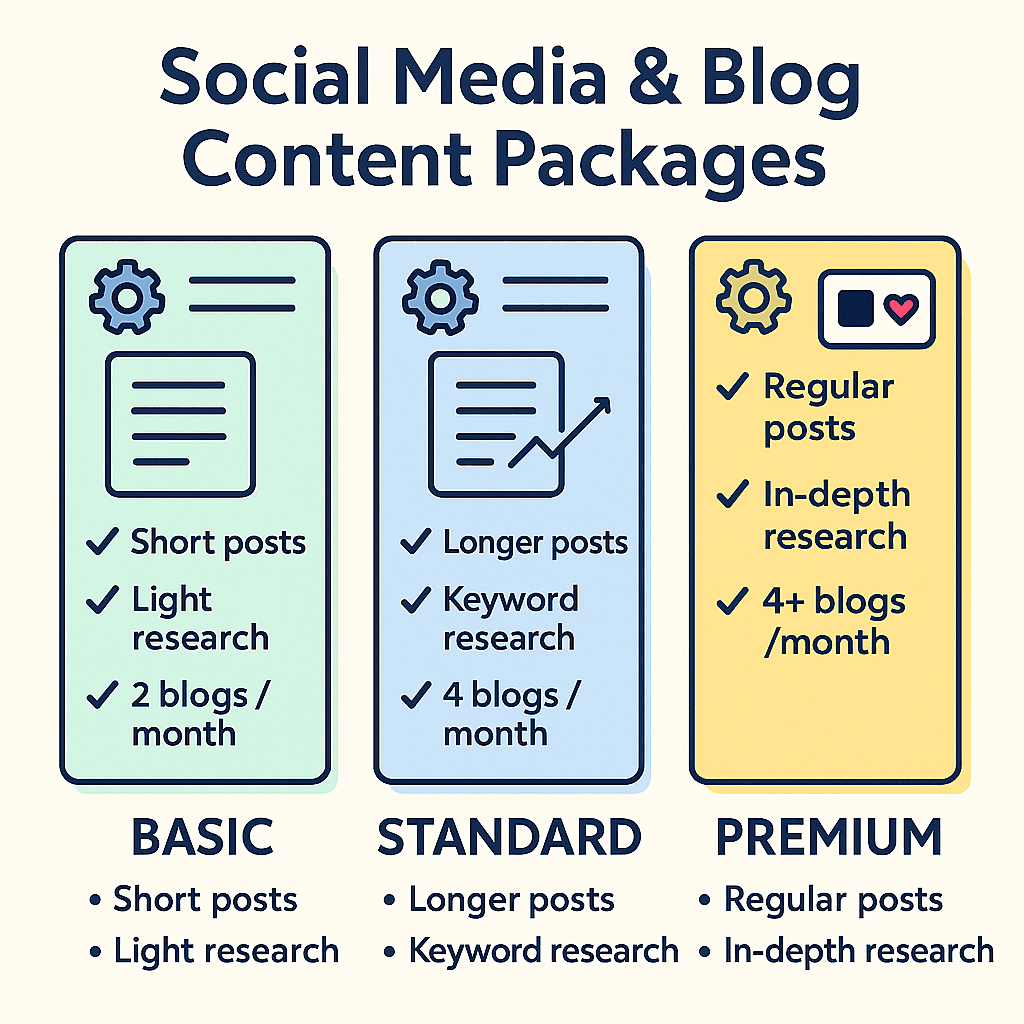
Here’s a simple way to decide which level suits you right now.
A starter content plan is best if:
- Your socials and blog have big gaps in activity
- You want to look active and professional online
- You’re just starting to think about SEO and authority
Think: a couple of blog posts and a handful of social posts each month to keep the lights on and start growing.
A growth content plan is best if:
- You want content to support SEO, email and campaigns
- You’re ready for more consistent publishing
- You want keyword-informed topics and proper on-page SEO
Think: deeper blog posts, more social posts and a small content strategy.
An authority content plan is best if:
- You’re in a competitive niche
- You want people to see you as the go-to expert
- You’re committed to a long-term content and SEO approach
Think: regular thought leadership, content hubs and strong integration with your broader marketing.
Bringing it all together
In 2026, social media blog content for small businesses isn’t just a box to tick — it’s how people find you, learn from you and decide whether to work with you.
You don’t need:
- Daily posts
- Ten different platforms
- Trend-chasing for the sake of it
You do need:
- A realistic publishing rhythm
- Content that sounds like you and supports what you sell
- Helpful posts, blogs and articles that build trust over time
- A plan that matches your current stage — starter, growth or authority
Over time, consistent content also opens doors to press, features and mentions on other sites. A good example of that compounding effect is the Vegavend press page, where ongoing visibility and clear messaging have led to regular coverage.
Start where you are. Build gradually. And if you’re tired of staring at a blank page every time you “sit down to write content”, that’s a strong sign it’s time to bring in a content partner like VVRapid so your socials, blogs and articles quietly work for your business while you focus on running it.
With a simple plan and consistent social media blog content for small businesses, your channels can quietly bring in the right people while you focus on running the business.