

A website content checklist for small business owners can save weeks of delay, dozens of back-and-forth messages, and a lot of stress once the project starts. Most website projects do not stall because the developer is slow. They stall because content, approvals, and business decisions are still floating around in email threads, voice notes, and half-finished documents.
Table of Contents
If you use a clear website content checklist for small business planning before the first design round, the whole project becomes easier to scope, build, review, and launch. That matters whether you are creating a lean brochure site, a service-led lead generation site, a blog, a portfolio, or a small online store.
VVRapid’s Website Design & Development service already makes this practical by asking for a short overview of the business and goals, branding, a rough page list, and access to hosting or the existing WordPress site before work begins. The service page also confirms that content upload is included across all three website packages, which makes preparation even more important because the smoother your handover is, the smoother the build becomes.
A helpful place to start is Website Design & Development. Once the page structure is clearer, you can support the build with Socials, Blogs & Article Writing and Search Engine Optimisation.
Why Content Delays Most Website Projects
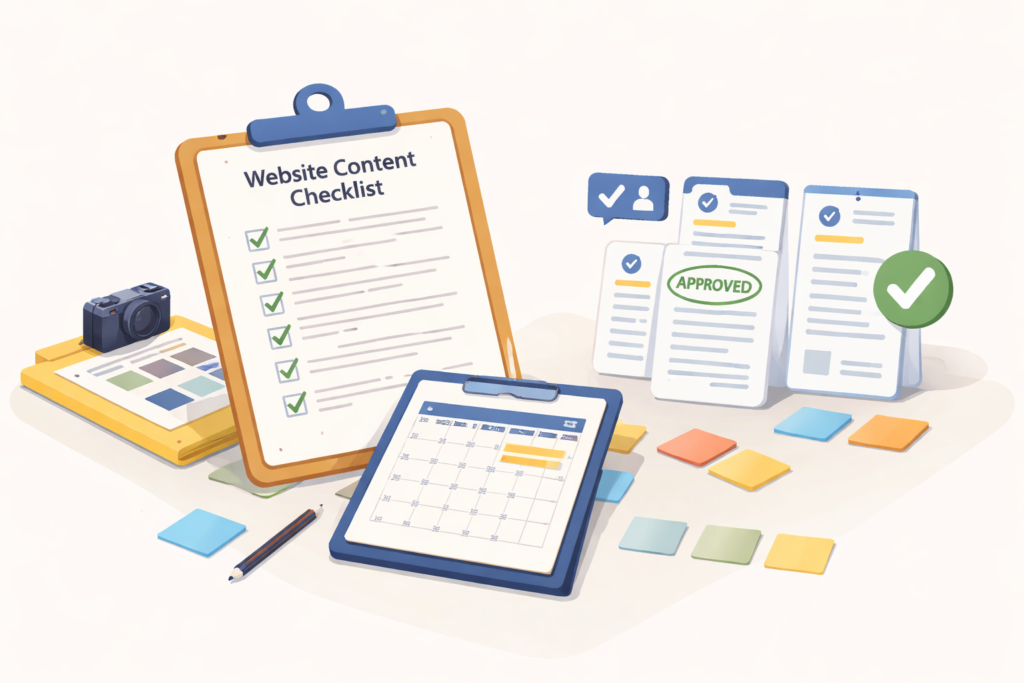
Business owners often think content can be “sorted later.” In reality, content affects almost everything:
- page count
- layout choices
- calls to action
- navigation
- image needs
- trust signals
- SEO structure
- approvals
- launch timing
This is especially relevant on VVRapid’s service page because its packages are scoped partly by unique pages. The page explains that unique pages include manually designed pages like Home, About, Contact, and Services, while non-unique pages can be generated automatically, such as product pages or article pages. That means content clarity directly affects how the website should be scoped before design starts.
A strong website content checklist for small business planning process is not about producing perfect copy upfront. It is about getting the right information into one place early enough that design and development can move forward without guesswork.
The Core Pages to Prepare First
Most small businesses do not need every page polished at once. Start with the pages that shape the structure of the site.
Home page
Prepare:
- a one-line description of what the business does
- the main problem you solve
- who you help
- your main services or offers
- one clear primary call to action
- any proof points such as years in business, locations served, or standout strengths
About page
Prepare:
- a short company story
- founder or team background
- values or approach
- a human explanation of why the business exists
- photos if available
Services or products page
Prepare:
- a list of services or product categories
- short explanations of each
- who each service is for
- what makes your offer different
- what action you want visitors to take next
Contact page
Prepare:
- email address
- phone or WhatsApp details
- business hours
- address if relevant
- service areas
- preferred enquiry method
Trust or proof pages
Depending on the business, this could include:
- testimonials
- case studies
- certifications
- project examples
- FAQs
- partners or associations
A practical website content checklist for small business should always start with these core pages because they shape the rest of the build.
The Content Assets to Gather Before Design Starts
This is where many projects become messy.
Before the build begins, gather these assets into clearly named folders:
- logo files
- brand colours
- fonts if you have licensed ones
- staff photos
- product photos
- service photos
- location photos
- videos if relevant
- social media links
- legal pages or policies
- testimonials
- case studies
- downloadable PDFs
- pricing or package info, if public
- contact details
- login access for hosting or the current website
VVRapid’s service page specifically says they usually ask for a short overview of your business and goals, any logo, colours or branding, a rough idea of the pages you want, and access to your hosting account or existing WordPress website to get started. It also notes that if you do not already have images, they can source suitable stock imagery and combine it with the visuals you provide.
That is useful because a website content checklist for small business should not only cover words. It should also cover the assets that help the site look credible and complete.
What to Write Before the Website Build
You do not need every paragraph fully polished before kickoff. But you do need enough written material to avoid making the design team invent your business story from scratch.
Prepare draft copy for:
- homepage headline
- short intro paragraph
- service summaries
- about summary
- FAQs
- CTA wording
- contact prompts
- trust statements
A good starting format is simple:
- What you do
- Who you help
- What result they want
- Why they should trust you
- What they should do next
This is one reason the website content checklist for small business angle is so practical. It reduces the risk of beautiful layouts with vague messaging.
The SEO Details to Prepare Early
Even if SEO work happens later, some decisions are easier when made before the build starts.
Prepare:
- your core services
- the locations you serve
- the terms customers actually use
- a rough page-to-topic map
- any existing blog content worth keeping
- competitor notes if relevant
- important internal linking opportunities
Google’s SEO Starter Guide emphasizes making pages useful to people first, while also helping search engines understand page content and site structure. That lines up well with preparing clear page topics and content early rather than trying to patch them in after launch.
This is where Search Engine Optimisation can support the website plan before pages are locked in.
Brand and Visual Decisions to Finalise Early
Many “content delays” are actually brand decision delays.
Before the build starts, try to settle:
- preferred logo version
- colour palette
- image style
- tone of voice
- whether the brand should feel corporate, friendly, premium, local, technical, or minimalist
- any visual examples you like
- any styles you definitely want to avoid
A website content checklist for small business should include these decisions because they affect how content is presented, not just what it says.
Approvals: Decide Who Signs Off on What
This part saves a surprising amount of time.
Before the project begins, define:
- who approves copy
- who approves visuals
- who approves legal or compliance content
- who gives final sign-off
- how feedback should be sent
- how quickly approvals should be returned
Without this, one stakeholder wants the site to sound more formal, another wants more personality, and someone else suddenly remembers a new service halfway through development.
Think: a website build slows down fast when everyone can comment but nobody can decide.
Checklist: Website Content Checklist for Small Business Owners
Use this before the project starts:
- □ Finalise your page list
- □ Write a short business overview
- □ List your main services or product categories
- □ Define your main call to action
- □ Draft homepage and service-page copy
- □ Gather testimonials and proof points
- □ Prepare team, service, or product photos
- □ Collect logo files and brand colours
- □ Confirm social media links
- □ Prepare contact details and business hours
- □ Gather legal pages or policy text
- □ List any FAQs customers ask often
- □ Identify target locations if relevant
- □ Prepare access to hosting or current website
- □ Decide who signs off on copy and design
- □ Set review turnaround expectations
- □ List any integrations or forms needed
- □ Flag anything still missing before kickoff
A well-used website content checklist for small business planning process makes the whole project calmer and easier to manage.
Common Mistakes
Waiting for perfect copy
Perfection slows momentum. Strong draft copy is usually enough to start.
Sending content in fragments
If text is spread across WhatsApp, email, PDFs, and old brochures, the project becomes harder to manage.
Forgetting image rights or quality
Low-quality or random images can weaken a professional build.
Leaving approvals undefined
When nobody owns sign-off, every review round gets slower.
Treating SEO as an afterthought
SEO does not need to dominate the project, but key page topics and site structure should be considered early.
Adding services during the build
Scope drift often starts with “just one more page.” Clarify the offer early.
Assuming the developer will write everything
Some teams can help shape copy, but they still need business knowledge, raw material, and clear direction.
This is why a website content checklist for small business matters so much. It turns vague prep into specific action.
A Simple Folder Structure That Helps

To keep things manageable, create one shared folder with subfolders like:
- 01 Brand assets
- 02 Copy drafts
- 03 Images
- 04 Testimonials and proof
- 05 Legal
- 06 Access details
- 07 Feedback and approvals
That may sound basic, but it makes a huge difference when the project moves quickly.
How VVRapid Can Help
VVRapid’s Website Design & Development service already supports the setup work that many small businesses struggle with. The live page says all packages include content upload, and the “What do you need from me to get started?” section asks for exactly the kind of material covered in this article: business goals, brand assets, rough page ideas, and website or hosting access. The page also notes that if you do not have your own images, suitable stock visuals can be sourced to keep the website consistent.
Not every business starts a website project with everything neatly organised. If your content is still scattered across documents, emails, product sheets, or team conversations, VVRapid can help bring it into shape before the build gains speed. That is where Website Design & Development can work well alongside Digital Strategy Roadmaps or Fractional Digital Team, especially if you need help turning rough information into a clearer plan.
FAQ – website content checklist for small business
What is a website content checklist for small business?
A website content checklist for small business is a practical list of the copy, images, assets, access, approvals, and business details needed before a website build starts.
Do I need all my website copy finished before design starts?
No. You usually need strong drafts and clear page goals, not perfect final wording on day one.
What files should I prepare before a website project?
Prepare logo files, brand colours, images, service details, contact information, testimonials, policies, and any website or hosting access needed.
Who should approve website content?
Ideally, one person should coordinate feedback and one final decision-maker should sign off to avoid delays.
Can I still start if I do not have professional photos?
Yes. VVRapid’s service page says they can source stock images if needed and combine them with visuals you provide.
A website project runs more smoothly when the prep work is clear. Before your build starts, use this checklist to gather the right content, assets, and approvals so the site can move forward without unnecessary delays. For the practical next step, visit Website Design & Development or contact VVRapid.