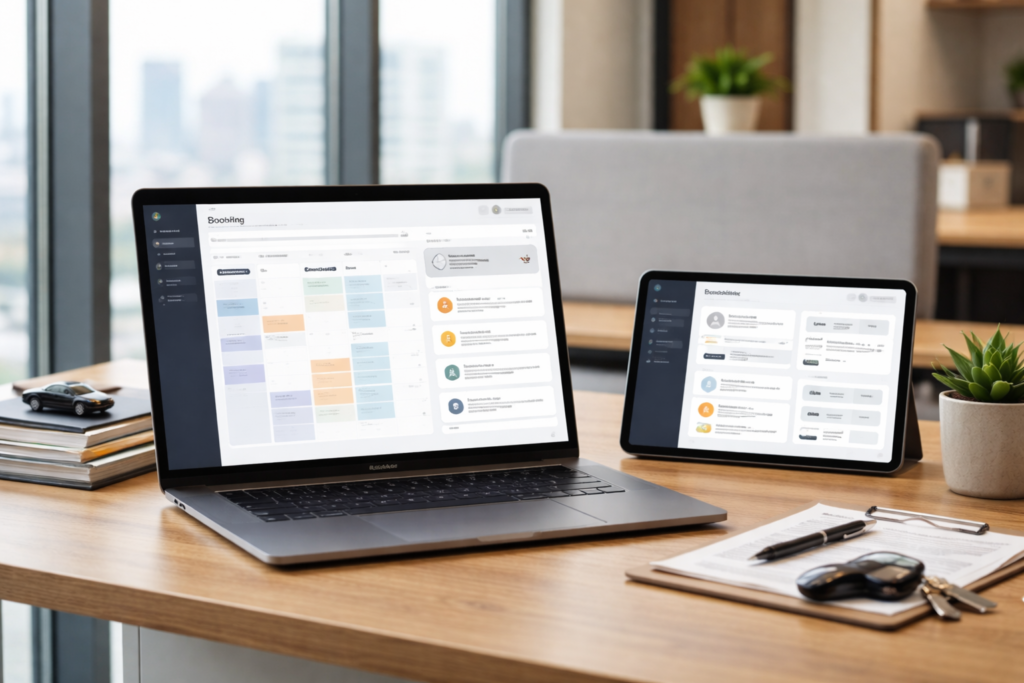
WordPress booking plugin development is worth considering when your business has moved beyond simple “pick a time and pay” scheduling. If you handle appointments, classes, rentals, consultations, team availability, deposits, reminders, or multi-step booking logic, generic booking plugins can start to feel like a patch instead of a system.
Table of Contents
A lot of businesses begin with an off-the-shelf booking tool because it gets them online quickly. That is often the right first step. But mixed booking models create pressure fast. Different services need different durations. Staff calendars overlap. Some bookings need buffers, approvals, deposits, or follow-up workflows. Others need recurring availability, blackout dates, or custom forms. That is usually where WordPress booking plugin development becomes less about adding features and more about removing friction.
Whether you run a clinic, salon, consultant practice, workshop business, equipment rental service, class-based operation, or multi-location service brand, the main challenge is the same. Your booking setup has to match how the business actually runs, not just how a plugin expects bookings to work.
What WordPress booking plugin development actually solves
At its core, WordPress booking plugin development solves the gap between your real-world scheduling process and the limited logic inside a generic booking tool.

That gap often shows up in areas like:
- different booking types on one site
- one-to-one appointments and group sessions
- resource-based bookings
- staff-specific availability
- service-specific durations
- prep and cleanup buffers
- lead qualification before confirmation
- deposits and partial payments
- approval-based bookings
- recurring schedules
- customer self-service changes
- reminder and follow-up workflows
For many businesses, the booking problem is not only about calendars. It is also about operations.
A booking system might need to account for rooms, equipment, staff, travel time, class size, custom intake questions, or post-booking actions. That is where WordPress booking plugin development starts making practical sense. It lets you shape the booking flow around the way services are actually delivered.
When off-the-shelf booking plugins are enough
Not every business needs custom work.
An off-the-shelf booking plugin is often enough when:
- you offer a small number of straightforward services
- every booking follows the same logic
- staff availability is simple
- deposits and approvals are not complicated
- customer workflows are linear
- the admin team is comfortable with the plugin
- reporting needs are basic
For example, if your business only needs customers to select a service, choose a time, and receive an email confirmation, a standard plugin may do the job very well.
That matters because WordPress booking plugin development should not be treated as the default answer. Custom becomes valuable when it simplifies complexity, not when it creates a bigger build than the business actually needs.
When WordPress booking plugin development is the better fit
This is where the buying decision becomes clearer.
WordPress booking plugin development is usually the better fit when your booking process has too many exceptions, too many workarounds, or too much admin overhead.
That often includes businesses with:
- mixed booking models on one site
- service rules that vary by category
- staff with different hours, skills, or locations
- recurring bookings plus one-off bookings
- classes, appointments, and rentals in the same system
- custom forms or qualification steps before approval
- customer types with different booking rights
- integrations with CRMs, payments, or internal tools
- a need for cleaner admin workflows and reporting
In those cases, a generic booking plugin may still cover part of the process, but it starts dictating how the business has to behave. That is the tipping point where WordPress booking plugin development becomes more appealing.
What to build first in a custom booking plugin
This is the most important part of the article, because many booking projects go wrong by trying to build everything at once.
If you are planning WordPress booking plugin development, build these foundations first.
1. Booking types
Define exactly what kinds of bookings the system must support.
Examples:
- private appointments
- group classes
- rental slots
- consultations
- recurring sessions
- staff-assigned bookings
- location-based bookings
Do not bundle everything under “bookings.” Each type often has different rules.
2. Availability logic
This is where many generic tools start to strain.
You may need to account for:
- staff schedules
- business hours
- location rules
- blackout dates
- holidays
- travel time
- prep time
- cleanup buffers
- maximum daily capacity
- overlapping resources
If availability is complicated, it should be scoped early. Otherwise, the front-end might look fine while the real operations break underneath it.
3. Booking states
Not every booking is simply “booked” or “not booked.”
A stronger WordPress booking plugin development brief often includes states like:
- pending
- awaiting approval
- confirmed
- rescheduled
- cancelled
- completed
- no-show
- expired
Those states matter because they affect reminders, payments, calendar visibility, and admin workload.
4. Customer journey
Map the real booking flow:
- discovery
- service selection
- date and time selection
- custom form completion
- payment or deposit
- confirmation
- reminders
- changes or cancellations
- follow-up
A booking plugin should support the customer journey, not just the time slot selection.
5. Admin workflow
This is often the hidden pain point.
Ask:
- Who approves bookings?
- Who can reschedule?
- Who can block out time?
- Who sees staff calendars?
- Who can issue refunds or deposit adjustments?
- Who handles follow-up communication?
- Who exports reports?
That is where WordPress roles and capabilities become relevant. WordPress already supports role-based permissions, and custom development can build more tailored booking controls on top of that foundation. (wordpress.org)
6. Integrations
List everything the booking system needs to talk to.
That might include:
- payment gateways
- CRMs
- email tools
- SMS systems
- Google Calendar or other calendar tools
- internal databases
- reporting dashboards
- staff tools
WordPress’s REST API provides a way for custom plugins and applications to exchange structured data, which is useful when booking workflows need to connect with external systems or custom front-end experiences. (developer.wordpress.org)
Checklist: what your booking plugin needs before build starts

Use this checklist before requesting a quote or briefing a developer.
- A list of all booking types
- Clear availability rules
- Buffer time requirements
- Staff and resource rules
- Payment or deposit logic
- Approval or review rules
- Cancellation and rescheduling rules
- Reminder needs
- Intake form requirements
- Reporting requirements
- Integration list
- User role and admin permission requirements
- Version one priorities
- Features that can wait for phase two
This is especially useful for businesses that offer more than one service line and do not want the booking setup to become a long-term admin burden.
Common mistakes in booking plugin planning
Building for edge cases first
Many teams get distracted by the rare scenarios before they have built the core flow. Start with the most common booking journeys first.
Underestimating availability complexity
Availability looks simple until you include staff differences, resources, buffers, blackout dates, and customer-facing rules.
Ignoring admin usability
A booking system can look polished on the front-end and still be painful to manage. That becomes expensive very quickly.
Treating every service the same
Different services often need different durations, form fields, confirmation steps, and cancellation logic. Forcing them into one template usually causes friction.
Forgetting post-booking actions
A booking is often the start of the workflow, not the end. Reminders, task creation, follow-ups, calendar syncs, and support actions matter too.
Skipping build quality and security
Booking systems touch customer data, user permissions, and operational workflows. WordPress’s Plugin Handbook stresses best practices for compatibility, organization, and plugin quality, while its security guidance covers capabilities, data validation, nonces, and safe output handling. (developer.wordpress.org, developer.wordpress.org)
A practical way to phase WordPress booking plugin development
Do not try to launch the perfect booking platform all at once.
A stronger version one usually focuses on:
- core booking types
- core availability rules
- deposit or payment basics
- customer confirmation flow
- admin management tools
- one or two critical integrations
Then later phases can add:
- advanced reporting
- customer self-service portals
- multi-location logic
- more automation
- staff performance reporting
- custom dashboards
- more granular booking states
This phased approach usually leads to better adoption and less rework.
That is also where strategic planning and ongoing maintenance start to matter. If the business needs help mapping the rollout before development, this is a good place to reference Digital Strategy Roadmaps. If long-term plugin stability and compatibility are part of the bigger picture, Website Maintenance & Care can fit naturally here too.
How to decide whether to customise or extend
Sometimes the smartest route is not building a fully custom booking platform from zero.
In many cases, the better answer is to keep an existing booking plugin for basic functionality and customise the parts that create the most friction.
That might include:
- custom availability rules
- admin dashboards
- intake workflows
- reporting
- approval systems
- customer portals
- integrations
- role-based controls
That type of WordPress booking plugin development can be a strong middle ground. It preserves useful parts of the current system while removing the weak spots that slow the business down.
For service businesses, this is often the most commercially sensible approach because it improves operations without replacing everything at once.
How VVRapid can help
If your booking setup feels more like a workaround than a system, VVRapid can help scope and build the custom parts that make it easier to run. That may mean a fully custom booking plugin, or it may mean extending your current setup with cleaner availability logic, admin tools, dashboards, reporting, and integrations. This fits directly with VVRapid’s Custom Plugin Development service, which focuses on practical WordPress functionality, tailored integrations, custom admin tools, and leaner workflows.
A sensible next step is to identify which parts of your current booking process are causing the most operational drag, then decide whether the right answer is a better configuration, a focused extension, or fuller WordPress booking plugin development.
FAQ – WordPress Booking Plugin Development
Is WordPress booking plugin development only for large businesses?
No. Smaller service businesses can benefit too when their booking logic is complex enough that generic tools are creating admin or customer experience problems.
Can you extend an existing booking plugin instead of replacing it?
Yes. In many cases, extending a stable plugin is the most practical route, especially when only certain workflows need custom logic.
What makes mixed booking models difficult?
Mixed booking models become difficult when appointments, classes, rentals, staff rules, resources, and payments all need to stay in sync.
Does WordPress support role-based admin access for booking systems?
Yes. WordPress roles and capabilities provide a base for managing permissions, and custom development can extend that for more detailed booking workflows. (wordpress.org)
What should I build first in a booking plugin?
Start with booking types, availability logic, booking states, customer flow, admin workflow, and integrations before worrying about extras.
If your current booking setup is becoming harder to manage than it should be, view the Custom Plugin Development service page or contact VVRapid to explore a cleaner long-term approach.