
Choosing between a brochure website vs lead generation website is one of the most useful early decisions a small business can make before a website project starts. It shapes the scope, the messaging, the content load, and the kind of results you should expect from the site once it goes live.
Table of Contents
Many business owners say they need a new website, but that can mean very different things. Some need a clean online presence that helps people understand the business and make contact easily. Others need a website that works harder by supporting enquiries, quote requests, bookings, or sales conversations. VVRapid’s own Website Design & Development page reflects that range, from simple brochure sites to fuller service-led builds focused on UX and real-world results.
The good news is that neither model is automatically better. The right choice depends on what the website needs to do for the business right now.
What is a brochure website?
A brochure website is a simpler website built to present the business clearly and credibly. Its job is to help people understand who you are, what you offer, and how to contact you.
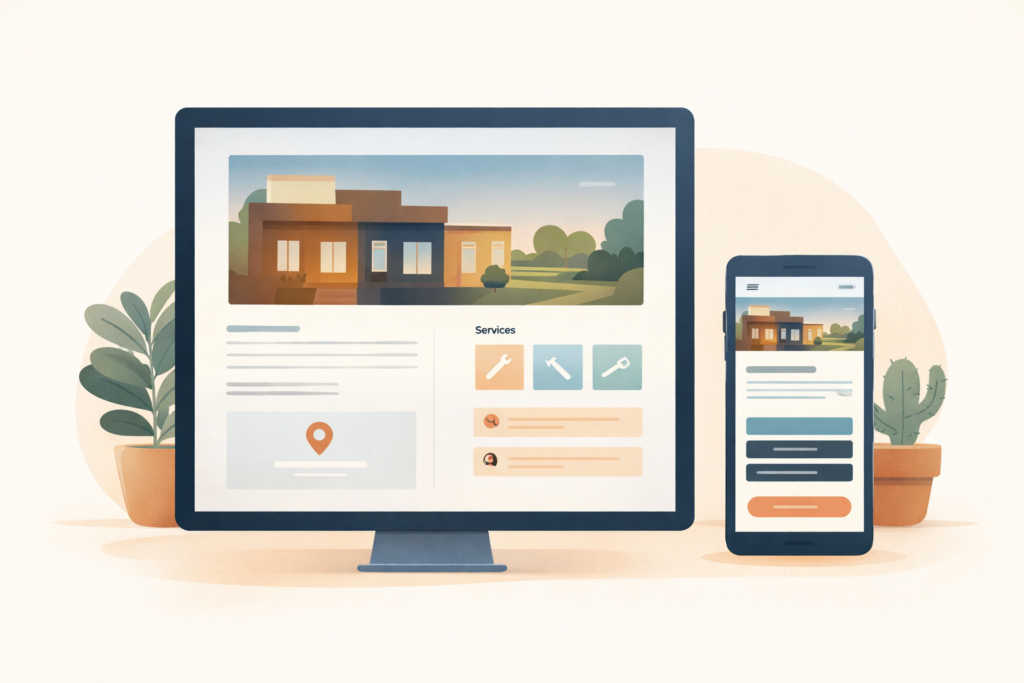
A brochure website can be:
- a one-page site
- a compact multi-page website
- a clean online presence for a local business, consultant, studio, or professional service
That matters because “brochure website” is about purpose, not page count.
In practice, a brochure website is often a good fit when the main goal is:
- visibility
- trust
- clarity
- easy contact
VVRapid’s service page supports this framing directly. It describes local business websites as fast, mobile-friendly sites that make it easy for customers to find you, contact you, and trust you.
A brochure website usually keeps things lean. It may include:
- a short business introduction
- a summary of services
- contact details or a contact form
- trust signals such as testimonials, credentials, or portfolio examples
- a clear call to action like call, email, WhatsApp, or enquiry
For many small businesses, that is enough.
What is a lead generation website?
A lead generation website is built with a more deliberate commercial job to do. It is designed to move visitors toward action, not just understanding.
That action might be:
- requesting a quote
- booking a consultation
- filling in an enquiry form
- starting a sales conversation
- contacting the business about a specific service
A lead generation website usually puts more thought into:
- page intent
- CTA placement
- trust near conversion points
- service-specific messaging
- search intent
- conversion flow
This does not mean it has to be flashy or aggressive. In fact, Google’s people-first content guidance is a useful reminder here. Helpful content should be created to benefit people first, not just to chase rankings. A lead generation website still needs to feel useful, clear, and trustworthy.
Brochure website vs lead generation website: the real difference
The simplest way to think about brochure website vs lead generation website is this:
A brochure website is mainly there to present the business clearly.
A lead generation website is mainly there to move the right visitor toward a next step.
That difference affects almost every part of the build.
Purpose
A brochure website supports credibility and presence.
A lead generation website supports enquiries and conversion.
Messaging
A brochure website often keeps the copy shorter and broader.
A lead generation website usually needs more decision-support content. That can include:
- clearer service explanations
- stronger problem-solution messaging
- FAQs
- process details
- trust and proof near calls to action
User journey
A brochure website often answers, “Who are you and how do I reach you?”
A lead generation website answers, “Why should I choose you, and what should I do next?”
Measurement
A brochure site may be judged by whether it makes the business look professional and helps people get in touch.
A lead generation site is more likely to be measured by:
- enquiries
- quote requests
- bookings
- conversion rate
- lead quality
When a brochure website makes sense
A brochure website is often the right choice when the business does not need the website to do heavy lifting on acquisition.
This usually fits businesses that:
- get a lot of work through referrals
- have a strong offline reputation
- need a clean digital presence
- want a leaner launch
- are not yet investing in SEO or campaigns in a serious way
Examples might include:
- a local accounting practice
- a consultant with a referral-led pipeline
- a boutique design studio
- a trades business that mainly needs trust and contactability
- a one-person service business that needs a polished web presence
In these cases, a brochure site can be very effective. Simple does not mean weak. Sometimes simple is exactly right.
A one-page brochure website can work especially well when:
- the offer is easy to understand
- the audience already knows what they need
- the next step is straightforward
- the business wants speed and clarity over complexity
When a lead generation website makes sense
A lead generation website usually makes more sense when the website needs to bring in opportunities more actively.
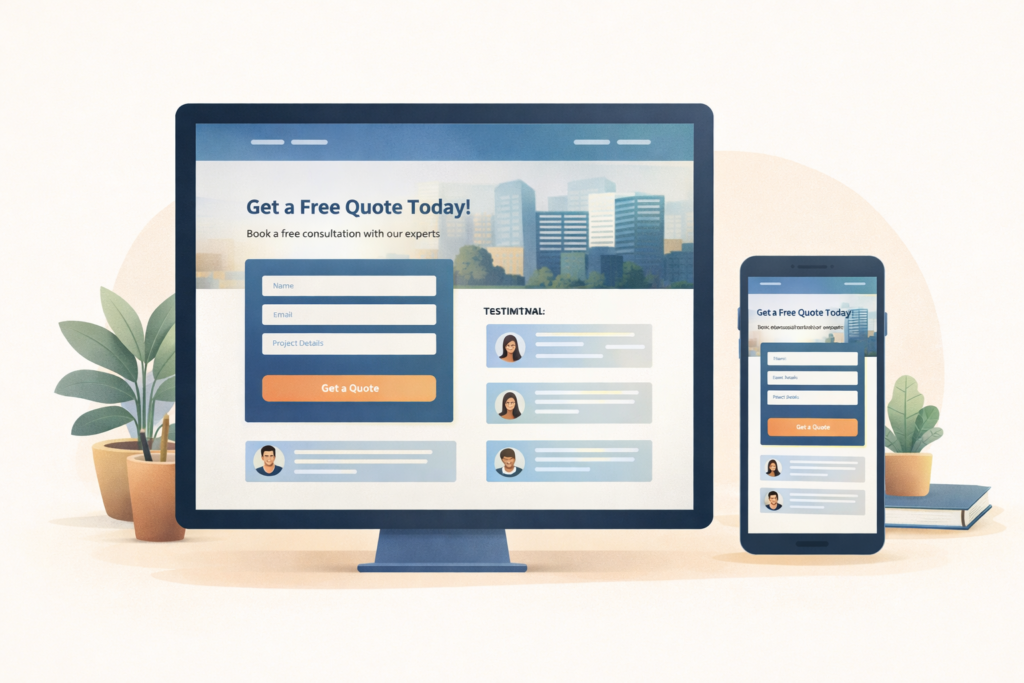
This is often a better fit when the business:
- wants more inbound enquiries
- competes in a crowded market
- offers services that need explanation
- wants service pages to rank in search
- needs stronger conversion flow
- wants the site to support growth, not just presence
For example, a service business that wants consistent search traffic and qualified leads may need:
- a stronger homepage journey
- dedicated service pages
- more persuasive supporting copy
- FAQs that handle objections
- trust signals placed close to forms and CTAs
Nielsen Norman Group notes that trust online is influenced by factors such as design quality, clear information architecture, and upfront disclosure. That matters here because lead generation depends on confidence as much as visibility.
Brochure website vs lead generation website on scope and budget
This is where many projects go off course.
A brochure website is usually lighter in scope because it often needs:
- fewer page templates
- less copy
- less content planning
- simpler conversion paths
- lighter ongoing maintenance
A lead generation website usually needs more strategic input because it often depends on:
- stronger messaging
- more intentional UX
- service-page depth
- trust content
- conversion-focused structure
- better alignment with SEO
That does not mean every business should jump straight to a lead generation build.
Sometimes the better move is to start with a brochure website, then evolve parts of it into a stronger lead-generation system once the offer, audience, or growth plan is clearer. That kind of phased approach aligns well with VVRapid’s positioning around practical, modern builds tailored to business goals rather than one-size-fits-all templates.
Checklist: how to choose the right model
Use this checklist before you commit.
Choose a brochure website if most of these are true:
- You mainly need a professional online presence.
- Most work comes from referrals or repeat clients.
- Your offer is simple to explain.
- You want a leaner launch.
- A one-page or compact site could do the job.
- You are not relying heavily on search or campaigns yet.
Choose a lead generation website if most of these are true:
- You want the site to bring in enquiries.
- Buyers need more information before they contact you.
- You want stronger service-page visibility in search.
- Your sales process benefits from FAQs, proof, and clearer CTAs.
- You want to track conversion performance more closely.
- The website is part of your growth plan.
If the answers are mixed, a hybrid model is often the best fit. That might mean a simple brochure-style site overall, with a few more conversion-focused service pages where it matters most.
Common mistakes
Mistake 1: Assuming bigger is always better
Some businesses do not need a large website. A focused brochure website can outperform an overbuilt site that tries to do too much.
Mistake 2: Assuming a brochure site must be multi-page
It does not. A brochure site can absolutely be a one-pager if the offer is clear and the user journey is simple. VVRapid’s service positioning leaves room for simple brochure sites as a valid starting point.
Mistake 3: Treating design as the whole strategy
A clean design matters, but design alone does not decide whether the site is brochure-led or lead-generation-led. The real question is what action the site should support.
Mistake 4: Building for lead generation without enough trust
If people are meant to enquire, the site needs to reduce hesitation. That can include:
- clear contact details
- real testimonials
- process transparency
- team visibility
- useful FAQs
- proof of relevant work
Trust cues are not decorative. They support action.
Mistake 5: Creating lead-focused pages that are thin or generic
Google is clear that content should be helpful, reliable, and written for people first. Thin pages built only around keywords or CTAs are a weak foundation.
A practical way to decide before you build
Ask these five questions.
1) What is the website’s main job?
Is it there to validate the business, or to create more sales conversations?
2) How do people usually find you?
If most visitors come through referrals or branded search, a brochure model may be enough. If you want non-branded search traffic to convert, lead generation matters more.
3) How much explanation does the buyer need?
The more complex the service, the more likely you need stronger service pages, FAQs, and trust signals.
4) What can the team realistically maintain?
A lead generation website often performs better when it is actively supported with content, SEO, and upkeep. That is where related services like Search Engine Optimisation and Website Maintenance & Care can fit naturally.
5) What would success look like in a year?
More credibility? More quote requests? Better lead quality? Faster decision-making? Define success before choosing the model.
FAQ
Is a brochure website bad for SEO?
No. A brochure website can still rank if it is technically sound, relevant, and useful. It is simply not always built around conversion as aggressively as a lead generation website.
Can a brochure website be a one-page website?
Yes. A brochure website can be a one-pager or a small multi-page site. The key point is that its role is to present the business clearly and make contact easy.
Does every small business need a lead generation website?
No. Some businesses mainly need credibility and clarity. Others need the website to actively support enquiries. It depends on growth goals and buyer behaviour.
Can one website do both?
Yes. Many small businesses use a hybrid model, with a simple overall site and a few more conversion-focused pages for priority services.
How VVRapid can help
VVRapid designs and builds websites that match the real job the site needs to do, whether that is a simple brochure presence, a more service-led site, or a website designed to support better enquiry flow. The goal is not to make every site bigger. It is to make the site more useful, clearer to navigate, and better aligned with the business. For businesses that need strategy around structure and goals before design begins, Digital Strategy Roadmaps can help clarify the direction. The core starting point is Website Design & Development.
A good website does not need to do everything. It needs to do the right job well.
See VVRapid’s Website Design & Development service page or get in touch if you want help choosing the right website model for your business.